
Jupiter Position and Visibility Tonight
Is Jupiter Visible Tonight?
From your location, Jupiter is visible from early morning until sunrise. The current position, altitude, direction, and tonight’s rise and set times are shown below.
When Is the Best Time to See Jupiter Tonight?
The earliest practical time to observe Jupiter tonight is around 03:35, when it is already about 30° above the horizon. It reaches its highest point of about 37° around 04:08.
When Is Jupiter’s Next Opposition?
The next opposition of Jupiter is on February 11. Around opposition, the planet is opposite the Sun in the sky and is generally at its best for observing.
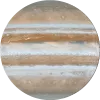
Where is Jupiter right now?
Jupiter is located in the constellation Leo, approximately 5.9 AU (882,029,046 km) from Earth. It is currently below the horizon and is not visible from your location.

Jupiter visibility on 2026-10-03
Jupiter Visible from early morning until sunrise
Jupiter rise and set timetable
| Time | Elevation | |
| Jupiter transit | 07:52 | 68° |
| Jupiter set | 14:39 | |
| Astronomical observing session begins | 18:15 | -33° |
Moonrise, 56.5% illuminated 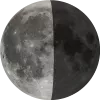 | 21:14 | -34° |
| Jupiter rise | 01:01 | |
| Astronomical observing session ends | 03:38 | 31° |
| Twilight end (−12°) | 04:08 | 37° |
| Civil sunrise | 04:39 | 43° |
| Sunrise | 05:06 | 48° |
| Moonset | 12:53 | 20° |
Track Jupiter position throughout the night
← 3 October 2026 →
| Time | |
| Altitude | |
| Azimuth |
Shift the map to change the time and observe Jupiter changing position in the night sky.
Jupiter Moon Positions
Track Jupiter’s four largest moons — Io, Europa, Ganymede and Callisto — as they rapidly change position around the planet during the night.
Upcoming Events
| Time | Description | Constellation |
|---|---|---|
| 13 December 2026 | Retrograde motion of Jupiter begins | Leo |
| 11 February 2027 | Jupiter is at opposition | Leo |
| 13 April 2027 | Retrograde motion of Jupiter ends | Cancer |
| 31 August 2027 at 15:00 | Leo |
Current position in the Solar System: Jupiter
| Date | Sat, 3 October 2026 |
| Distance from Earth | 5.8973 AU (882,223,523km) |
| Elongation | 50° |
| Angular diameter | 33.4" |
| Magnitude | -1.9 |

Jupiter Passage Through Night
Double-click to unlock the map.
Current position of Jupiter
| Time | 17:28 |
| Latitude | 37.3541 |
| Longitude | -121.955 |
| Elevation | -28° |
| Azimuth | 321° |
Here you can see the current position of Jupiter on the map, as well as its positions for rise and set. This tool lets you track its movement throughout the night with accurate, up-to-date information.
When Is Jupiter Visible Throughout the Year?
Jupiter will remain visible until July 22, when it moves too close to the Sun and temporarily disappears from the night sky.
| Date | Sun, 4 October 2026 |
| Astronomical observing session begins | 18:13 |
| Astronomical observing session ends | 03:36 |
| Astronomical observing duration | 9h 23m |
| Rise | 01:01 |
| Set | 14:36 |
| Elevation at transit | 68° |
| Transit time | 07:49 |
| Equatorial coordinates | RA: 09h 30m 54s", Dec: 15° 20' 56s |
| Magnitude | -2 |
| Constellation | Leo |
The graph illustrates the annual visibility pattern of Jupiter, including its daily appearances and transit times. The vertical axis shows the hours of the day and the horizontal axis spans the year. The reddish area marks when the object is above the horizon, while the white line marks its daily transit.
You can also see when Jupiter is visible throughout the year in a table with exact rise, transit, and set times for each date.
You can also see when Jupiter is visible throughout the year in a table with exact rise, transit, and set times for each date.
Astrometric and Physical Parameters of Jupiter
Coordinates and Visibility
| Right Ascension | 09h 30m 17s |
| Declination | 15° 23′ 47″ |
| Magnitude | -1.9 |
| Constellation | Leo |
| Elevation | -27.5° |
| Azimuth | 320.7° |
| Distance to Earth | 5.896 AU |
| Angular diameter | 33.4″ |
| Elongation from Sun | 49.9° |
| Illuminated fraction | 99.5% |
Basic Properties
| Mass, kg | 1.89819E+27 |
| Mean density, g/cm³ | 1.3262 +- .0003 |
Orbit
| Orbital period, days | 4332.589 |
Rotation
| Sidereal rotation period, days | 9h 55m 29.711 s |
Surface and Atmosphere
| Surface gravity, m/s² | 28.34 |
| Escape velocity, km/s | 59.5 |
| Mean temperature, K | 165+-5 K |
Brightness
| Visual magnitude V(1,0) | -9.40 |
Data Acknowledgment
Solar-system physical and orbital parameters are provided by the Solar System OpenData API maintained by Le Système Solaire. We thank its contributors for making these open data available.